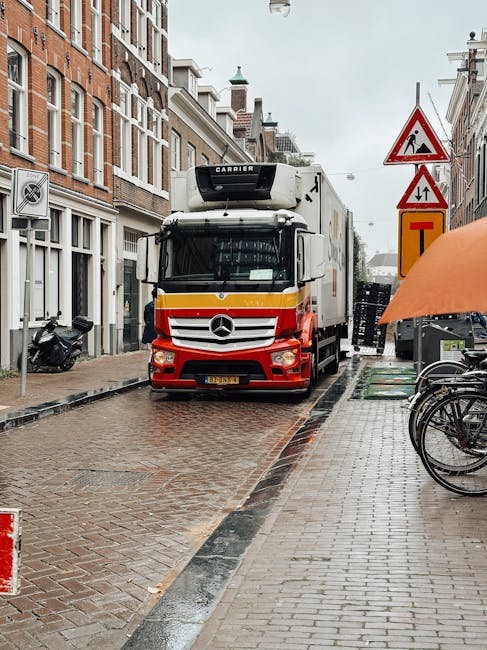
Campden Hill Road furniture removals tips for narrow access
Moving furniture along Campden Hill Road can look straightforward on a map and then feel very different once you're standing at the front door. Narrow hallways, awkward stair turns, basements, shared entrances, and a parked car in exactly the wrong place can turn a simple move into a slow, sweaty puzzle. That is exactly why Campden Hill Road furniture removals tips for narrow access matter so much: the right approach saves time, protects your furniture, and reduces the stress that usually shows up halfway through the day.
Whether you are moving a sofa into a top-floor flat, clearing a family home, or arranging a more delicate delivery into a period property, narrow access changes everything. The good news? With a bit of planning, the right measuring, and a removal team that understands London streets and old buildings, tight access does not have to become a disaster. Let's break it down properly.
Table of Contents
- Why Campden Hill Road furniture removals tips for narrow access Matters
- How Campden Hill Road furniture removals tips for narrow access Works
- Key Benefits and Practical Advantages
- Who This Is For and When It Makes Sense
- Step-by-Step Guidance
- Expert Tips for Better Results
- Common Mistakes to Avoid
- Tools, Resources and Recommendations
- Law, Compliance, Standards, or Best Practice
- Options, Methods, or Comparison Table
- Case Study or Real-World Example
- Practical Checklist
- Conclusion
- Frequently Asked Questions
Why Campden Hill Road furniture removals tips for narrow access Matters
Campden Hill Road sits in one of those London areas where charm and difficulty often come as a pair. Period buildings, compact stairwells, basement flats, mews-style layouts, limited kerb space, and busy traffic all make removals more complicated than they first appear. That is why narrow access planning matters so much here. It is not just about getting furniture from A to B. It is about doing it without damage, delay, or a nasty surprise on the day.
In our experience, most moving problems in tight-access properties come from one of three things: inaccurate measurements, poor route planning, or assuming the item will "probably fit" if everyone just tries hard enough. To be fair, that optimism is common. But in a narrow staircase or a tight entrance hall, hope is not a strategy.
Good planning matters because it affects:
- how much of the furniture can be moved intact
- how long the job takes
- whether walls, bannisters, or floors get marked
- how many people are needed on the job
- whether a lift, hoist, or shuttle vehicle is required
If you are still early in the process, it can help to look at broader moving support too, such as removals services tailored to different property types and practical advice on packing and preparation help for fragile items. Those pages sit neatly alongside narrow access planning because the move rarely works in isolation. One small decision affects the next, and then the next.
How Campden Hill Road furniture removals tips for narrow access Works
Narrow access removals work best when the move is treated like a route-planning exercise, not just a lifting job. The team needs to know the furniture dimensions, the building layout, and the access constraints before moving day. That usually means a combination of photos, measurements, and a quick discussion about parking, stairs, and any awkward turns.
Here is the basic process, stripped back to the essentials:
- Measure the furniture carefully. Height, width, depth, and any protruding parts such as handles, arms, or feet.
- Measure the access route. Door frames, hallways, stair width, landing space, and headroom all matter.
- Check the route from kerb to room. Sometimes the problem is not the front door but the passage through the building.
- Decide whether dismantling is needed. Beds, wardrobes, tables, and modular units often move more safely in parts.
- Assess parking and loading access. On a street like Campden Hill Road, the vehicle position can affect everything.
- Choose the right equipment. Furniture dollies, shoulder straps, blankets, skates, and protective wraps can make all the difference.
- Protect the property before movement starts. Door edges, bannisters, and floors should be guarded from scuffs and impact.
The practical trick is to think in terms of the largest object and the tightest point. If the widest part of the sofa meets the narrowest part of the staircase, that is where the problem will show itself. Not later. Right there, usually with everyone standing awkwardly and pretending the angle will magically improve.
For more detailed support with awkward rooms and specialist handling, it is worth checking furniture removals for bulky or delicate items and house removals guidance for larger household moves. Those pages help when the job is bigger than a single item and you need a more organised plan.
Key Benefits and Practical Advantages
When you plan narrow access properly, the benefits are immediate and very tangible. You are not just buying convenience. You are reducing risk and avoiding unnecessary hassle.
| Benefit | What it means in practice | Why it matters on Campden Hill Road |
|---|---|---|
| Less damage | Furniture, walls, and floors stay better protected | Older properties and tight staircases leave little room for error |
| Faster move | Fewer last-minute pauses and fewer failed attempts | Parking pressure and access bottlenecks can waste time quickly |
| Lower stress | The day feels controlled instead of chaotic | That matters when neighbours, time slots, and shared entrances are involved |
| Better safety | Less chance of strain, trips, or dropped items | Heavy furniture on narrow stairs is a real manual handling risk |
| Cleaner decisions | You know what must be dismantled, wrapped, or re-routed | That avoids guesswork on the day |
A quieter but important benefit is confidence. When everyone knows the plan, there is less rushing, fewer arguments, and much less of that strange removal-day panic where a perfectly normal chair suddenly becomes a major event.
It is also easier to budget sensibly. Narrow access jobs sometimes need extra labour, special handling, or more time on site. That does not automatically mean expensive, but it does mean the job should be quoted properly rather than guessed at from a vague description.
Who This Is For and When It Makes Sense
This approach is useful for anyone moving furniture into, out of, or within a property where access is tight. But some people need it more urgently than others.
- Flat owners and tenants in mansion blocks, period conversions, or upper-floor apartments
- Homeowners with narrow hallways, split-level layouts, or basement-level entrances
- Landlords and letting agents arranging turnaround moves between occupancies
- Interior designers and buyers bringing in large furniture pieces with fixed deadlines
- Families downsizing who need careful handling of bulky, sentimental items
- Anyone moving on a busy London street where loading space is limited
It makes especially good sense when you already know one of the following is true: the furniture is oversized, the stairwell is narrow, the lift is small, or the access route includes a sharp corner. If any of those are in play, the move is not really a standard job anymore.
Sometimes the best decision is not to force a piece through at all. Truth be told, there are situations where dismantling or even replacing an item is smarter than risking damage to a listed staircase or a carefully decorated wall. That is not failure. That is just good judgement.
If you want to explore related support for shorter-notice moves, the page on same-day removals for time-sensitive situations can also be helpful, especially where access issues need quick coordination.
Step-by-Step Guidance
Here is a practical way to approach a narrow-access move on Campden Hill Road without losing your nerve halfway through.
1. Survey the route before moving day
Walk the route from the vehicle drop-off point to the furniture's final position. Look at corners, stair turns, low ceilings, door swings, and anything that might snag. If possible, take photos. They are surprisingly helpful when speaking to a removal team later.
2. Measure with real numbers, not estimates
Do not rely on "about the width of the door" or "roughly as tall as the landing". Use a tape measure. Measure the item at its widest point and the access route at its narrowest. Leave no room for hopeful guessing. A few centimetres can be the difference between a smooth lift and a complete stop.
3. Decide what must be dismantled
Beds, wardrobes, dining tables, media units, and some sofas often move more safely in sections. Keep screws, fittings, and brackets in labelled bags. A tiny detail, yes, but it saves a lot of muttering later when the item needs rebuilding at the other end.
4. Protect surfaces before the move starts
Use floor protection, corner guards, and door blankets where needed. In older homes, even a light scrape can leave a mark you will notice every time you walk past it. That sort of thing lingers.
5. Plan the lifting team and equipment
Some items only need two people and a trolley. Others may require a larger crew, straps, or a second attempt from a different angle. It helps to be realistic. More hands are not always better, but the right number of experienced hands usually is.
6. Load in the right order
Put the trickiest items on the vehicle in a way that makes unloading simple. The front-end thinking matters. If the first item off is buried under seven lighter boxes, you have just created extra work for yourself.
7. Recheck access before final placement
At the delivery point, pause before lifting. Check that the route still works, especially if there are changes in weather, parked cars, or building access. This is the moment where a calm second look can prevent a problem that would otherwise grow arms and legs.
Expert Tips for Better Results
These are the little things that tend to separate a smooth narrow-access move from a long, frustrating one.
- Use photos from multiple angles. A hallway can look generous from one side and impossible from another.
- Check furniture shape, not just size. Rounded arms, fixed feet, and awkward protrusions often catch first.
- Keep a clear path from the front door inward. Shoes, bins, rugs, and side tables can become annoying obstacles.
- Protect corners before the first item moves. One impact is enough to cause a chip or dent.
- Think about timing. Early morning or quieter hours can sometimes reduce stress from traffic and shared access.
- Ask about alternative entry points. Rear access, garden gates, service entrances, or a different stairwell may solve the problem.
One overlooked point: if the item is valuable, antique, or fragile, moving it quickly is not the aim. Moving it steadily is. Slow is not always slow. Sometimes slow is the professional choice.
Expert summary: The best narrow-access removals are won before the item is lifted. Measure carefully, protect the route, decide in advance what must be dismantled, and keep the day flexible enough to adapt when the building presents a surprise or two.
If you need a broader read on moving confidence and service planning, the page on our removals guide and planning advice can help you link the practical details together.
Common Mistakes to Avoid
Most narrow access problems are avoidable. That is the annoying part, but also the encouraging part. A few small errors tend to create most of the damage.
- Measuring only the furniture, not the route. Both matter equally.
- Forgetting handles, legs, or curved edges. These often add the crucial extra width.
- Leaving dismantling until the van arrives. That is a classic time drain.
- Assuming a sofa will "tilt through". Sometimes it will. Often it will not.
- Ignoring building rules or neighbour access needs. Shared spaces are not the place for improvisation.
- Using the wrong lifting technique. That increases injury risk and can damage the item.
- Not checking parking restrictions. On busy London streets, this can create a domino effect of delays.
There is also a subtle mistake people make when they are stressed: they rush the decision and then pay for it later in damaged furniture or tired backs. Nobody wants that. Not on a Thursday morning, not ever.
For people planning a full property move rather than a single item, it can help to review structured office and commercial moving support too, because the same discipline around access, timing, and packing applies. Different setting, same principle.
Tools, Resources and Recommendations
You do not need a warehouse full of equipment to manage a narrow-access move well, but the right basics make a noticeable difference.
| Tool or resource | What it helps with | Best use case |
|---|---|---|
| Measuring tape | Checking furniture and route dimensions | Always, before booking or moving |
| Furniture blankets | Protecting wood, upholstery, and corners | Large pieces and fragile finishes |
| Removal straps | Improving control on stairs and tight turns | Heavy or awkward items |
| Dolly or trolley | Moving items across flat surfaces | Boxes, cabinets, and shorter internal runs |
| Corner guards | Reducing impact marks on walls and frames | Older homes and sharp hallway turns |
| Photo walkthrough | Giving a clear view of access before the move | Remote quoting and pre-assessment |
For many local moves, photos and measurements are more useful than long descriptions. A quick video walk-through can also help, especially if the route includes a basement stair, a very tight lobby, or a shared entrance with limited room to stage items.
It can also be worth keeping a small "moving kit" to hand: parcel tape, labels, marker pens, a cloth for dust, and a few bags for screws or fittings. Nothing fancy. Just the boring little things that save the day.
Law, Compliance, Standards, or Best Practice
For furniture removals, the most relevant point is usually safe working practice. There are not many special legal rules unique to moving a sofa through a narrow hall, but there are still important UK expectations around manual handling, safe lifting, and avoiding damage or injury.
In practical terms, that means a professional removal job should usually consider:
- safe manual handling methods
- clear communication between team members
- reasonable protection of the property
- careful planning around access and parking
- insurance cover appropriate to the work being done
If you live in a managed building or a conversion with shared areas, the building management may also have move-in or move-out expectations. These might include booking lifts, protecting communal floors, or using specific access times. Always check the building's own rules first, because local arrangements can be stricter than people expect.
It is also sensible to confirm whether any parking suspensions, loading permissions, or access arrangements are needed for the vehicle. On a street like Campden Hill Road, that small bit of admin can make the whole day smoother. A bit dull, yes. Still important.
If you are comparing service support and want a broader overview of move preparation, our packing support page and removals and storage options may also be useful, especially if your access issue means the move needs to be split across more than one stage.
Options, Methods, or Comparison Table
There is more than one way to handle a narrow-access furniture move. The right method depends on the item, the building, and how much risk you are willing to accept. Here is a straightforward comparison.
| Method | Best for | Pros | Limits |
|---|---|---|---|
| Carry in one piece | Compact furniture with generous access | Fast, simple, less assembly later | Not suitable for tight corners or large items |
| Dismantle and rebuild | Wardrobes, beds, tables, modular pieces | Improves fit and reduces collision risk | Takes more time and requires careful labelling |
| Specialist handling | Heavy, valuable, or awkward items | Better control and safer movement | May need extra manpower or equipment |
| Window or alternative access | Extremely restricted stair or doorway access | Can solve otherwise impossible moves | Needs planning, permissions, and suitable conditions |
| Storage first, move later | Delayed completions or staged moves | Reduces pressure and allows flexibility | Adds cost and another handling step |
Most jobs on Campden Hill Road will not need the most dramatic option. Usually, a careful mix of dismantling, protective wrapping, and sensible team planning is enough. But if the access is very limited, the smartest move is to be honest about that early rather than pretending it will work out on the day.
Case Study or Real-World Example
Picture a typical first-floor flat move on a side street off Campden Hill Road. The item in question is a large three-seat sofa with fixed arms. At first glance, it looks manageable. Then the measurements come out, and the narrow stair landing tells a different story.
The team walks the route before lifting. The front entrance is tight, the staircase turns sharply halfway up, and a bannister rail leaves less room than expected. Instead of forcing the sofa through and hoping for the best, the crew removes the feet, wraps the arms, and tests the angle before committing to the full lift. They also place protection on the most vulnerable edges of the hallway.
Result? The sofa gets moved without damage, the walls stay clean, and the job finishes without the "we nearly had it" drama that so often eats up time. Nothing glamorous. Just careful work done properly.
That kind of approach is exactly why narrow access planning matters. The move looks uneventful from the outside, which is usually the point. Quiet success is a lovely thing.
Practical Checklist
Use this checklist before a tight-access furniture move. It is simple, but it catches a lot.
- Measure the furniture at its widest, tallest, and deepest points
- Measure doorways, hallways, stair width, and landing turns
- Check whether the item can be dismantled safely
- Photograph the access route from entrance to final room
- Confirm parking, loading, and building access arrangements
- Protect floors, corners, bannisters, and door frames
- Label screws, bolts, and fittings in separate bags
- Agree who is handling what on the day
- Have blankets, straps, and a trolley ready if needed
- Keep a backup plan in case the first route does not work
Quick practical reminder: if a piece looks borderline, treat it as borderline. That single mindset saves a lot of trouble.
Conclusion
Narrow access removals on Campden Hill Road are not really about brute force. They are about preparation, patience, and making smart choices before the furniture starts moving. If you measure carefully, protect the route, and plan for the quirks of the building, the whole process becomes far more manageable than people expect.
The real win is not just getting the item through the door. It is getting it there without stress, without damage, and without that awful moment when everyone realises the turning space is not quite enough. With the right approach, tight access becomes a challenge you can handle rather than something to dread.
Get a free quote today and see how much you can save.
And if you are still weighing up the move, take it one step at a time. Careful planning always pays back in the end, and a calm move is a better move, every time.
Frequently Asked Questions
What counts as narrow access for furniture removals?
Narrow access usually means doorways, staircases, hallways, or entrances that leave very little margin for bulky items. It is less about a strict measurement and more about whether a piece can pass safely without forcing, scraping, or excessive lifting.
How do I know if my sofa will fit through the staircase?
Measure the sofa at its widest point, including arms and feet, then measure the tightest part of the route, especially the stair landing and turn. If the item is close to the limit, ask for a route assessment rather than guessing. A few centimetres really can decide it.
Should I dismantle furniture before a narrow access move?
Often, yes. Beds, wardrobes, tables, and some sofas are easier and safer to move in parts. Dismantling reduces the chance of damage and makes it easier to handle tight corners. Just make sure every part is clearly labelled.
Can furniture removals be done in older London buildings with tight staircases?
Yes, but they need more planning and usually a more careful method. Period homes and converted flats often have narrow landings, steep stairs, and awkward corners. That does not stop the move, but it does change how it should be done.
Do I need special equipment for narrow access removals?
Sometimes. Furniture blankets, straps, dollies, corner guards, and floor protection are all common tools for tight spaces. Not every move needs every item, but the right equipment can make the job smoother and safer.
Is it cheaper to move furniture if I dismantle it first?
Not always, because dismantling takes time. But it can reduce the chance of delays, damage, or needing extra labour on the day. In practice, it often saves money by preventing avoidable problems.
What should I tell the removals team before the job?
Give them accurate measurements, photos of the route, details of the property layout, parking information, and anything unusual such as steep stairs or basement access. The more honest and specific you are, the better the plan they can make.
What are the biggest risks with narrow access furniture moves?
The main risks are damage to the furniture, scuffs or chips to the property, manual handling injuries, and time overruns. Most of these risks reduce significantly when the access route is checked properly before lifting starts.
Can a removals team use a window or alternative entrance?
In some situations, yes, but it depends on the item, the property, and whether the conditions are suitable. This is usually a specialist option and should be discussed in advance rather than assumed on the day.
How far in advance should I plan a narrow access move?
As early as possible. Even a short move benefits from advance checks, because access issues are much easier to solve before the truck arrives. If the building is complicated, a little extra lead time is very helpful.
What if the item does not fit on the day?
That is why a backup plan matters. The team may dismantle the piece further, try a different route, or arrange an alternative solution such as storage or a second visit. It is frustrating, but solvable if everyone stays calm and practical.
Are there any special rules for parking on Campden Hill Road?
Parking and loading can be tricky in central London streets, and local restrictions may apply. Always check the current arrangements with the relevant authority or building management before moving day, because access for the vehicle can affect the whole schedule.